




SpaceX Acquires Cursor for $60B, Revolut Secures UAE Licenses, SpaceX Plans $20B Bond Sale
By Stableton on June 24th, 2026
The biggest AI companies are expanding beyond models. Cursor gets acquired by SpaceX for $60B, Revolut secures UAE licenses to accelerate its Middle East expansion, and SpaceX plans a $20B bond raise after its record IPO. Let’s dive in…
THIS WEEK’S BREAKING NEWS
SpaceX acquires Cursor for $60B
SpaceX agreed to acquire Anysphere in a $60B all-stock transaction, strengthening its position in enterprise AI software following the integration of xAI. The deal gives SpaceX access to one of the fastest-growing AI coding platforms, which reportedly reached $2.6B in annualized B2B revenue. The acquisition also deepens SpaceX's AI capabilities as it competes with Anthropic and OpenAI in the rapidly expanding market for coding assistants and enterprise AI tools. (1)
STABLETON MORNINGSTAR PITCHBOOK UNICORN 20 STRATEGY
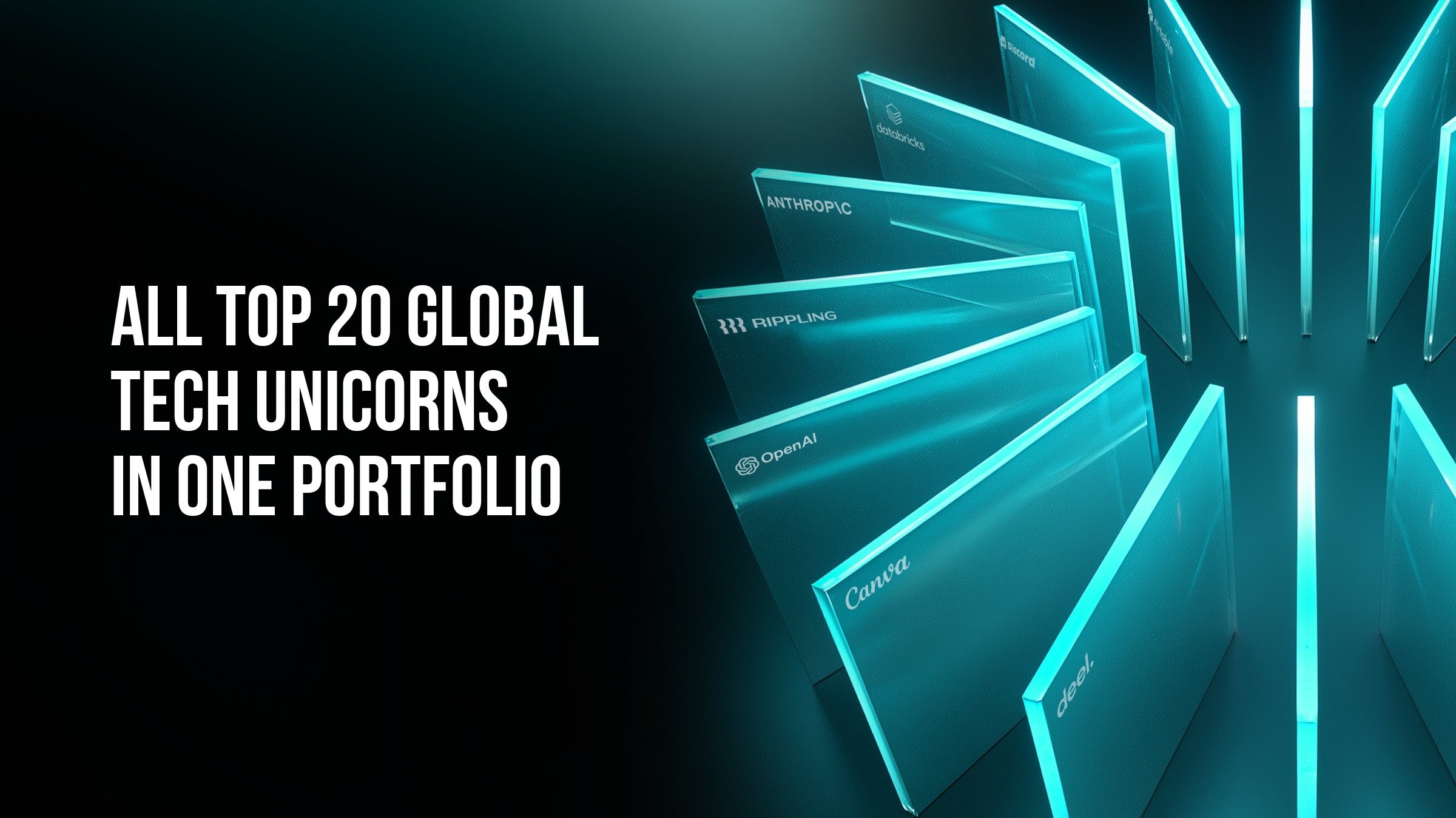
The Stableton Morningstar PitchBook Unicorn 20 strategy is the world’s first passive, systematic, and semi-liquid approach to investing in the Top 20 privately held tech companies before they go public.
This strategy offers a straightforward and cost-effective way to gain exposure to leading private technology companies within a single portfolio. With no performance fees and enhanced liquidity, it offers a unique alternative to traditional private market investments.
STABLETON NEWS
Read the Q1 2026 report on private tech
Q1 2026 was a historic quarter for private markets. SpaceX launched what became the largest IPO in history (2), AI investment as a share of GDP surpassed every prior technology cycle (3), and the global secondary market continued to grow with volumes on pace to exceed $250 billion (4).
The latest Stableton Private Blue-Chip Tech Navigator breaks down the developments that defined the first quarter of 2026. It covers market conditions, major funding rounds, valuation shifts, and liquidity trends, alongside data on the Stableton Morningstar PitchBook Unicorn 20 strategy.
As private tech matures into an institutional asset class, we prioritize keeping you updated on the data behind all the major shifts. We put this report together so you can see exactly where the market stands and where it’s heading.
View the full Q1 2026 report below.
PORTFOLIO NEWS
U.S. Army accelerates NGC2 rollout through Anduril partnership
Anduril was selected by the U.S. Army to lead the common data layer baseline for its Next Generation Command and Control (NGC2) program, moving the initiative from prototyping toward deployment. Working with Palantir and Raft, Anduril will deliver an edge-to-cloud data mesh underpinning battlefield data sharing. The award falls under a 10-year enterprise licensing agreement with a $20B ceiling, supporting the Army’s goal of accelerating NGC2 deployment across all 11 divisions, potentially within two to three years rather than five. (5)
Anduril moves CCA fighter into U.S. Air Force production
The U.S. Air Force selected Anduril's FQ-44 for the production phase of its Collaborative Combat Aircraft (CCA) program, making it the first semi-autonomous fighter aircraft to enter serial production. Just over two years after its prototype award, the program has progressed through ground testing, first flight, and production approval. Anduril's Arsenal-1 facility is already capable of producing up to 150 aircraft annually, supporting the Air Force's push toward affordable combat mass and scalable autonomous airpower. (6)
Anduril evaluates Israeli operations amid defense-tech growth
Anduril is exploring an expansion into Israel, including recruiting a local leader, establishing development operations, and pursuing partnerships with Israeli defense-tech startups. The move follows the company's recent $5B funding round at a $61B valuation. Already working with Israeli suppliers, Anduril is evaluating investment, acquisition, and collaboration opportunities as it deepens engagement with one of the world's most active defense innovation ecosystems. (7)
Anthropic opens Seoul office and expands Korean AI partnerships
Anthropic opened its Seoul office and expanded its presence across Korea's AI ecosystem through enterprise, startup, research, and government partnerships. The company signed an AI safety MOU with Korea's Ministry of Science and ICT, while organizations including NAVER, Samsung SDS, LG CNS, Hanwha Solutions, Nexon, and Channel Corp are deploying Claude and Claude Code at scale. Anthropic also launched research collaborations and startup initiatives, reinforcing Korea's position as a key market for AI adoption and development. (8)
Anthropic strengthens AI infrastructure through Micron partnership
Micron signed a supply agreement with Anthropic covering memory and storage products while also participating in the AI company's latest funding round. The partnership will focus on optimizing memory and storage performance across AI workloads as Anthropic expands infrastructure capacity for Claude. The agreement follows Anthropic's recent compute-related deals and comes after its recent Series H financing, which reportedly valued the company at $965B ahead of a planned IPO. (9)
Applied Intuition brings self-driving platform to Japan
Applied Intuition expanded its Self-Driving System (SDS) into Japan, extending its end-to-end autonomy platform to one of the world's most complex driving environments less than a year after launching SDS for Automotive. The system supports L2+ and L2++ driver-assistance capabilities, operates without HD maps or lidar, and runs on production-grade cameras and radar. The deployment demonstrates Applied Intuition's ability to rapidly adapt autonomous driving technology across regions, regulations, and real-world operating conditions. (10)
Databricks launches CustomerLake agentic marketing platform with Adstra and Bloomreach
Databricks launched CustomerLake, an agentic customer data platform designed to unify customer data, identity resolution, AI agents, and marketing activation within its Lakehouse architecture. The launch includes partnerships with Adstra, which provides identity resolution capabilities, (11) and Bloomreach, which enables AI-powered personalization across customer channels. Together, the integrations position CustomerLake as a unified platform for enterprise customer intelligence and engagement. (12)
Deel targets $120B field services workforce market in Africa
Deel launched Deel Field Services, a new platform targeting the $120B field services market across industries such as oil and gas, mining, construction, and heavy logistics. Built on the capabilities of Employ Africa Group, which Deel acquired in 2025, the platform supports complex workforce requirements, including rotational scheduling, compliance, and employer-of-record services. The launch expands Deel's workforce platform beyond remote, contractor, and office-based employment into large-scale field operations, with broader deployment planned through 2026 and 2027. (13)
Kraken integrates Solana DEX trading into core platform
Kraken launched onchain DEX trading within its main mobile app, allowing users to access thousands of Solana-based tokens through a familiar centralized exchange interface. Powered by embedded wallet infrastructure from Privy and integrations with Solana DEX protocols, the feature enables users to trade onchain assets using USD or USDC balances. Kraken plans to expand support to additional blockchain ecosystems as part of its broader strategy to combine centralized user experiences with decentralized infrastructure. (14)
Samsung deploys ChatGPT and Codex across global workforce
Samsung Electronics is deploying ChatGPT Enterprise and Codex across its global workforce, including all employees in Korea and worldwide within its Device eXperience division, in one of OpenAI's largest enterprise rollouts to date. The tools will support functions ranging from software development and manufacturing to marketing and product development. The deployment expands the relationship between Samsung and OpenAI beyond AI infrastructure into company-wide workforce transformation and productivity enhancement. (15)
OpenAI pitches ChatGPT ads at Cannes debut ahead of IPO
OpenAI used its debut appearance at the Cannes Lions advertising conference to promote ChatGPT ads and Codex as it builds new revenue streams ahead of a planned IPO. The company has expanded its advertising platform to seven markets and has reportedly discussed a potential $100B advertising opportunity by 2030 with investors. OpenAI said roughly 20% of ChatGPT queries show direct commercial intent, with travel, retail, beauty, health, and financial services among the strongest-performing advertising categories (16)
OpenAI advances AI-driven cyber defense with Daybreak expansion
OpenAI expanded Daybreak, its cybersecurity initiative aimed at helping organizations identify, validate, and remediate software vulnerabilities using AI. The update includes broader availability of GPT-5.5-Cyber, enhancements to Codex Security, and new programs supporting cyber defenders and open-source software projects. By combining AI-powered threat modeling, vulnerability validation, and patch generation, OpenAI is positioning Daybreak as a platform for building software that is resilient by design rather than relying solely on reactive security measures. (17)
Perplexity unveils Brain for self-improving AI workflows
Perplexity launched Brain, a memory layer for its Computer agent that builds a context graph of past sessions, sources, corrections, and outcomes to improve future performance. The system synthesizes this information into a personal knowledge base that loads before new tasks, allowing the agent to learn from prior work. Perplexity reports that Brain improves answer correctness by 25% on repeated tasks, increases recall by 16%, and reduces the cost of context-heavy workflows by 13%. (18)
Revolut secures UAE licenses to expand Middle East presence
Revolut received a Stored Value Facilities (SVF) license and a Retail Payment Services (Category II) license from the Central Bank of the UAE, completing the regulatory approval process for its local operations. The licenses enable Revolut to prepare for a broader launch of its financial services platform in the country, including multicurrency accounts, payments, cards, and money transfers. The approval marks a significant step in Revolut's Middle East expansion following its in-principle approval in September 2025. (19)
Flutterwave reaches $3.2B valuation with Ripple backing
Flutterwave announced a Series E funding round valuing the African payments infrastructure company at $3.2B, with Ripple participating as a strategic investor. The partnership aims to expand financial services and digital asset capabilities across Africa, where Flutterwave operates in 35 countries. The investment follows Flutterwave's acquisition of banking startup Mono and its stablecoin initiative with Polygon Labs, reinforcing its strategy to improve cross-border payments and financial connectivity across the continent. (20)
SpaceX lands $6.3B AI infrastructure agreement
SpaceX signed a computing infrastructure agreement with open-source AI startup Reflection AI that could be worth up to $6.3B through 2029. Under the deal, Reflection will gain access to Nvidia GB300 chips through SpaceX's Colossus platform and pay $150M per month beginning in July 2026. The agreement expands SpaceX's growing AI infrastructure business and adds Reflection to a customer roster that includes Anthropic, Google, and Cursor, highlighting increasing demand for large-scale AI compute capacity. (21)
SpaceX plans $20B bond sale after record IPO
SpaceX is preparing a $20B bond offering shortly after completing its record IPO, raising approximately $86B, with proceeds expected to refinance a bridge loan used to support the merger of xAI and X. The planned debt issuance follows strong post-listing performance and comes as the company expands investments in AI infrastructure. Moody's assigned SpaceX an investment-grade Baa1 rating, citing its leadership in launch services and satellite connectivity while highlighting execution risks tied to its large-scale AI buildout. (22)
Zip expands into agentic commerce through Stripe partnership
Zip US to support Stripe's Shared Payment Tokens (SPTs), enabling its flexible payment options to be used in AI-powered agentic commerce experiences. The technology allows AI agents to initiate transactions on behalf of consumers without exposing payment credentials, while extending payment methods beyond traditional card-on-file systems. The move deepens Zip's partnership with Stripe and positions the company to participate in emerging AI-driven checkout experiences where autonomous agents assist with purchasing decisions. (23)
DOJ backs xAI in Colossus 2 emissions lawsuit
The U.S. Department of Justice intervened in support of xAI, seeking dismissal of a lawsuit alleging the company illegally operated natural gas turbines powering its Colossus 2 data center in Tennessee. The NAACP claims the project violated Clean Air Act permitting requirements and exposed nearby communities to harmful pollutants. The Justice Department argued that restricting the facility's power supply could undermine national security, citing xAI's role in supporting military AI capabilities and broader U.S. AI infrastructure development. (24)
xAI upgrades Grok Imagine with Video 1.5; reaches general availability
xAI released Grok Imagine Video 1.5, making the model generally available through the Imagine API while also launching the faster Video 1.5 Fast version across Grok's web and mobile applications. The update improves image-to-video generation through enhanced motion, physics simulation, audio quality, and speech synchronization. xAI said sound effects, ambience, dialogue, and visual generation are now produced in a single workflow, aiming to deliver faster and more realistic creative content generation. (25)
OTHER NEWS
Microsoft builds major China AI business with ByteDance
Microsoft has established a significant AI business in China by providing access to OpenAI models and cloud infrastructure, with ByteDance emerging as one of its largest customers. According to the report, ByteDance is on track to spend more than $1B annually on Microsoft AI and cloud services, underscoring continued demand for advanced AI capabilities despite increasing geopolitical tensions and technology restrictions between the United States and China. (26)
Meta secures 1.6GW of AI capacity from Crusoe
Meta has reportedly signed agreements to secure 1.6GW of AI infrastructure capacity from Crusoe across data center campuses in Texas and Missouri. The deal expands Meta's growing portfolio of third-party compute commitments as the company accelerates investment in AI infrastructure and explores a future cloud computing business. The agreement follows Crusoe's announcement that it has contracted 4.9GW of AI infrastructure capacity and reinforces demand for large-scale AI data center developments across the United States. (27)
Groq raises $650M after Nvidia talent and IP deal
AI chipmaker Groq raised $650M in new funding as it rebuilds following Nvidia's licensing agreement and recruitment of founder Jonathan Ross, president Sunny Madra, and other key employees. The company is pivoting toward its neocloud business, which now spans 13 data centers across North America, Europe, the Middle East, and Asia-Pacific. Groq says the platform serves more than five million developers and processes trillions of AI tokens weekly, positioning the company to compete in the fast-growing inference infrastructure market. (28)
SandboxAQ wins $500M semiconductor materials contract
SandboxAQ received a $500M U.S. government award to develop new materials and chemicals for domestic semiconductor manufacturing, including alternatives to PFAS chemicals and rare-earth-dependent components. The Nvidia-backed company will apply its physics-based AI models to identify commercially viable solutions across four strategic areas, including catalysts, batteries, and permanent magnets. As part of the agreement, the U.S. Department of Commerce will receive a minority equity stake and future royalties from any commercialized technologies. (29)
Shield AI acquires Aechelon after $12.7B valuation
Shield AI completed its acquisition of simulation technology company Aechelon following the close of its $2B financing package, which valued the defense technology firm at $12.7B. The acquisition adds Aechelon's high-fidelity simulation, synthetic environment, and sensor modeling capabilities to Shield AI's Hivemind autonomy platform. The combination is intended to strengthen the development, testing, and deployment of autonomous military systems and manned-unmanned teaming technologies used by U.S. and allied defense organizations. (30)
Shield AI brings Hivemind autonomy platform to Greece
Shield AI partnered with Greece's EFA GROUP to bring its Hivemind autonomy software to unmanned systems, supporting the development of AI-enabled decision-making capabilities under human operator supervision. The collaboration positions Hivemind as a baseline autonomy stack for future unmanned platforms and reflects Greece's growing focus on autonomous defense technologies. Shield AI highlighted Greece's industrial capabilities, technical talent, and strategic importance as factors supporting the advancement of autonomous systems in Europe. (31)
SharonAI expands VAST partnership with 600PB deployment
SharonAI expanded its partnership with VAST Data by committing to deploy 600PB of the VAST AI Operating System across its sovereign AI cloud infrastructure in Australia and the broader Asia-Pacific region. The deployment will serve government, enterprise, research, and AI-native customers while providing a data foundation capable of supporting the equivalent storage requirements of approximately 100,000 GPUs. The initiative strengthens SharonAI's position in sovereign AI infrastructure as demand for large-scale training, inference, and agentic AI workloads continues to grow. (32)
WHOOP expands personalized health insights through HealthEx partnership
WHOOP partnered with HealthEx to enable U.S. members to connect electronic health records directly within the WHOOP app, combining clinical history with continuous biometric data from its wearable platform. Through WHOOP AI and My Memory, the integration allows factors such as chronic conditions, medications, and medical procedures to inform recovery, sleep, strain, and performance recommendations. The partnership reflects a broader push toward personalized health insights by unifying wearable and medical record data in a single experience. (33)
CHART OF THE WEEK
Capital deployment remains strong despite slower exits
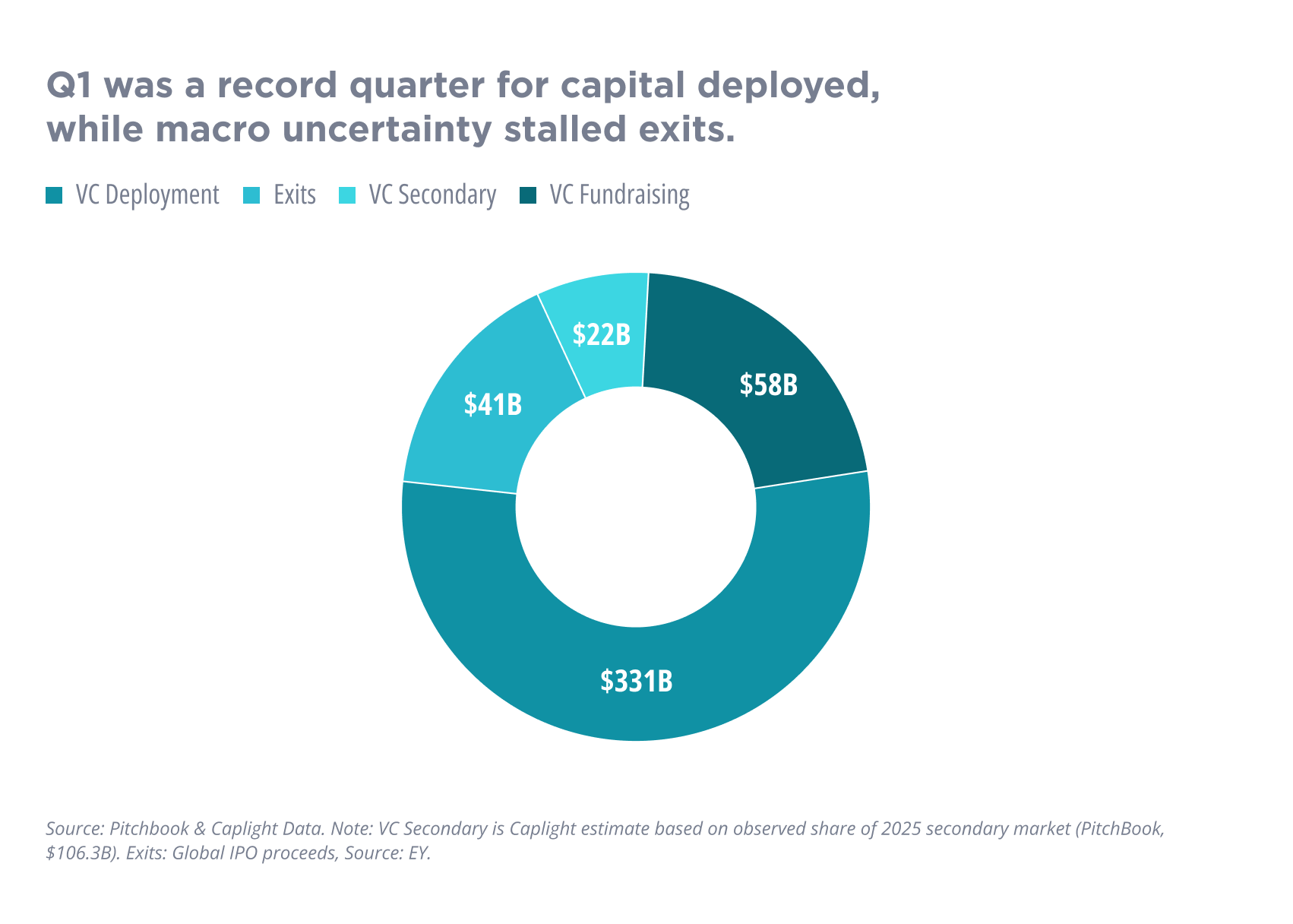
Venture capital keeps getting deployed, but liquidity remains hard to find.
While IPO and M&A activity remain muted, investors continue deploying capital into high-conviction private blue-chip companies. As a result, more value is being created in private markets while fewer opportunities exist to convert that value into liquidity.
That's one reason secondary markets have become such an important part of today's venture ecosystem. They provide a release valve for early investors, employees, and shareholders while giving new investors access to some of the world’s most sought-after private blue-chip companies.
This trend sits at the core of the Stableton Morningstar PitchBook Unicorn 20 strategy, which focuses on category-defining private blue-chip technology leaders where investor demand remains strong and secondary market activity continues to deepen.
THE UNTOLD UNICORN STORY
Stripe: From rural Ireland to global payments
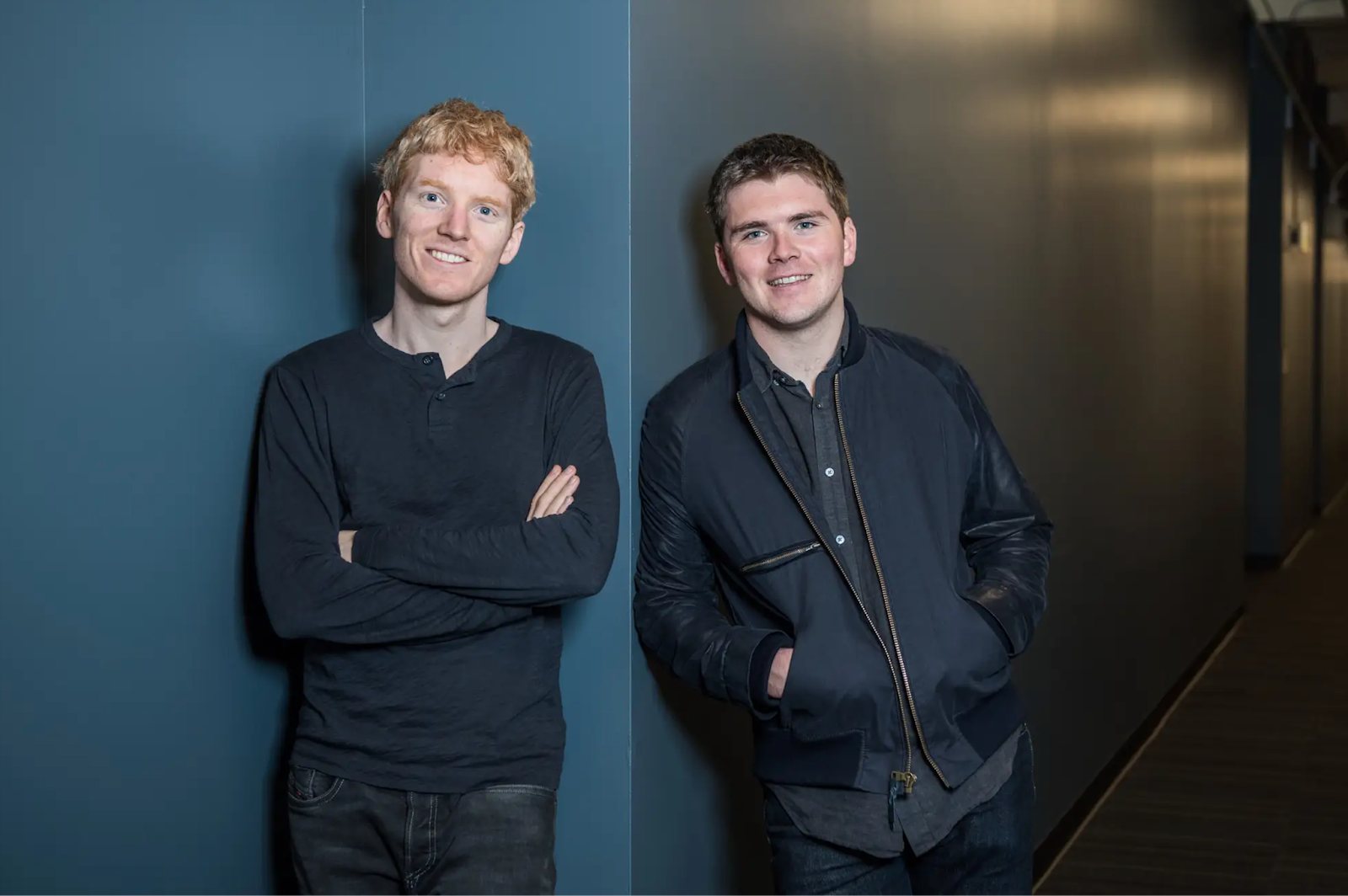 Stripe co-founders, Patrick and John Collison. (34)
Stripe exists because two Irish brothers thought accepting payments online was absurdly hard. Patrick and John Collison grew up in Dromineer, a village of fewer than 200 people in rural Ireland, teaching themselves to code without internet access (35). In 2008, at ages 19 and 17, they sold their first company for $5 million, then dropped out of MIT and Harvard to tackle a bigger problem. They built a prototype that let any developer accept payments with just seven lines of code, and launched Stripe in 2011 (36). In 2025, Stripe processed $1.9 trillion in payments, and in February 2026, the company was valued at $159 billion. (37)
Fun Fact: In the early days, despite already being millionaires from selling their first company, the Collison brothers biked to the Stripe office every day because they were too frugal to buy a car.
Did you know? Stripe is one of the 20 companies in our Stableton Morningstar PitchBook Unicorn 20 strategy, a systematic, index approach that aims to outperform public benchmarks with low-cost fees, and without a performance fee. Click below for more information.
SOURCES
1 - Reuters, 2 - Financial Times, 3 - NBC, 4 - William Blair, 5 - Breaking Defense, 6 - Anduril, 7 - CTech, 8 - Anthropic, 9 - Reuters, 10 - PR Newswire, 11 - Globe Newswire, 12 - Business Wire, 13 - PYMNTS, 14 - The Block, 15 - OpenAI, 16 - Financial Times, 17 - OpenAI, 18 - Decrypt, 19 - Retail Banker International, 20 - TechCrunch, 21 - CNBC, 22 - Financial Times, 23 - PYMNTS, 24 - Al Jazeera, 25 - xAI, 26 - Bloomberg, 27 - Data Center Dynamics, 28 - TechCrunch, 29 - Reuters, 30 - Shield AI, 31 - The Defense Post, 32 - Intelligent CIO, 33 - Business Wire, 34 - Business Insider, 35 - Citrus, 36 - TechCrunch, 37 - PYMNTS


Every Wednesday, the Navigator delivers a digest of news from our portfolio holdings and key trends shaping private tech investing. Subscribe to receive it directly in your inbox.


